
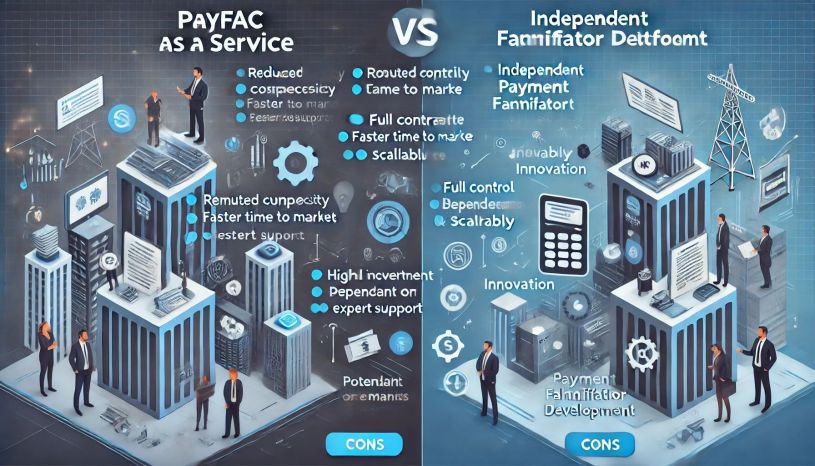
Modern businesses are presented with two primary paths when looking to offer payment facilitation services: leveraging PayFac as a Service or developing an independent payment facilitator platform. Each approach comes with its own set of advantages and challenges. Below, we explore the pros and cons of both options, providing a comprehensive guide to help you make informed decisions.
What is PayFac as a Service?
PayFac as a Service is a model where businesses utilize a third-party provider’s infrastructure, technology, and compliance frameworks to operate as payment facilitators. This service-oriented approach allows you to quickly and efficiently offer payment processing under their brand without the heavy lifting associated with traditional payment facilitation.
Pros of PayFac as a Service
Reduced Complexity
One of the most significant benefits of PaaS is the reduction in operational complexity. The provider handles the intricate aspects of payment processing, compliance, and risk management, allowing businesses to focus on their core operations.
Cost-Effective
Developing an independent payment facilitator platform requires substantial investment in technology, compliance, and ongoing maintenance. PaaS eliminates these costs by offering a ready-made solution, resulting in significant financial savings.
Faster Time to Market
PaaS providers offer pre-built solutions that can be quickly deployed. This rapid implementation enables you to go to market faster, capturing opportunities and gaining a competitive edge.
Scalability
PaaS platforms are designed to scale effortlessly, accommodating business growth without significant infrastructure changes. This flexibility is crucial for businesses looking to expand their operations or enter new markets.
Expert Support
PaaS providers offer dedicated support teams with expertise in payment processing and regulatory compliance. This ensures that businesses receive timely assistance and guidance, minimizing operational disruptions.
Cons of PayFac as a Service
Limited Customization
While PaaS offers significant flexibility, there may be limitations in customization compared to building an independent platform. Businesses with highly specific requirements might find PaaS less accommodating.
Dependence on Provider
Relying on a third-party provider means that businesses are dependent on the provider’s technology, uptime, and service quality. Any issues on the provider’s end can impact the business’s operations.
Fee Structure
PaaS providers typically charge fees for their services, which can include setup costs, transaction fees, and monthly maintenance fees. These costs can add up, especially for high-volume businesses.
What is Independent Payment Facilitator Development?
Independent Payment Facilitator Development involves building a proprietary payment processing platform from the ground up. This approach requires businesses to invest in technology, compliance, risk management, and ongoing maintenance to operate as independent payment facilitators.
Pros of Independent Payment Facilitator Development
Full Control
Building an independent platform gives businesses complete control over their payment processing environment. This control allows for extensive customization and the ability to tailor the platform to specific business needs.
Brand Identity
An independent platform enables businesses to fully integrate payment processing with their brand identity, creating a seamless and cohesive user experience.
Potential for Higher Margins
By eliminating third-party providers, businesses can potentially achieve higher profit margins. The savings from not paying provider fees can be substantial, especially for high-volume operations.
Innovation
An independent platform allows businesses to innovate and implement unique features and functionalities that differentiate them from competitors. This innovation can drive customer satisfaction and loyalty.
Cons of Independent Payment Facilitator Development
High Initial Investment
Developing a payment processing platform requires significant upfront investment in technology, infrastructure, and expertise. This cost can be prohibitive for smaller businesses or startups.
Complexity and Risk
Managing compliance, risk, and regulatory requirements independently is complex and resource-intensive. Any lapses in these areas can result in severe penalties and reputational damage.
Longer Time to Market
Building a platform from scratch takes time, often delaying the business’s ability to offer payment facilitation services. This delay can result in missed opportunities and lost revenue.
Ongoing Maintenance
An independent platform requires continuous maintenance, updates, and security enhancements. This ongoing effort demands dedicated resources and expertise.
What Option to Choose?
The decision between PayFac as a Service and independent payment facilitator development hinges on various factors, including your goals, resources, and long-term strategy.
Choose Independent Payment Facilitator Development if you:
- Require full control and extensive customization of your payment platform.
- Have the resources to invest in technology, compliance, and ongoing maintenance.
- Aim to innovate and differentiate your payment processing capabilities.
Choose PayFac as a Service if you:
- Seek a cost-effective and low-complexity solution.
- Need to go to market quickly and capture immediate opportunities.
- Value expert support and scalability without significant upfront investment.
Wrapping Up
At Akurateco, we specialize in providing cutting-edge PayFac as a Service solutions that empower businesses to offer seamless payment processing with ease. Our comprehensive suite of services includes a PCI DSS Level 1 certified payment platform, advanced anti-fraud modules, and partnerships with top-tier risk-scoring providers. We also offer flexible deployment options, including SaaS, on-premise, and cloud-agnostic systems, tailored to meet your specific needs. Whether you’re looking to leverage our expertise or need guidance on developing an independent platform, we are here to help.
 Business News Blog